Meele Miet

The elderly lady pats the saddle of her immaculate and quite original Miele roadster. “I have been riding this bike for 19 years”, she says, with a glimmer of pride in her eyes. “I saved it from being thrown out when a former colleague of mine died”, she adds, her words contrasting her conservative demeanour. “I can remember putting a bunch of flowers on her grave as a thankyou. Now, I have heard that there is this meeting here today, and I would finally like to learn how old my bike is.” One of the many knowledgeable bystanders remarks that a frame number in the 980 thousands points to 1950, and I quickly bend down to check the date code on the Torpedo single speed coaster hub: 1951. The elderly lady is impressed. “I knew it was old, but 62 years…” Then, somewhat thoughtfully, she says, “You know, this bicycle taught me that the price of a thing doesn´t necessarily determine its value.”

It is ten past seven in the morning. After about an hour´s worth of preparations ranging from eating a good breakfast to checking tire pressure and to stocking up my saddle bag with bananas, chocolate rolls and ready made cocoa drink, I set off in what one might call promising weather: Not too much wind, sunshine, six degrees Centigrade reinforced by a weather forecast that might have sprung from a dream. After the longest winter ever in our area, this will be one of the first really nice days, and I´m determined to make the best of it. Soon I find out that spring is really here.

XMWissingen

My steed for today is the 1930 Miele Model 2 based tourer described in an earlier post ( http://starostneradost.wordpress.com/2012/09/18/a-teaser/ ), and equipped with a mix of 1930s parts plus a tried and tested Brooks. It´s something of a bitser because the 1930 frame has late 30s mudguards and even a number of modern parts to make cycling easier, culminating in Shimano SPD pedals. I have also added a modern feeder bottle with a band on cage and a simple cycle computer giving speed and distance readings, because my aim for today is to cycle to Gütersloh, about 60 km away, take part in the Miele bicycle meeting, and return on my bike, too. As there will be an outing on the bikes during the meet, the day will hold about 140 km of roadster riding.

The headwind is not very noticeable, and I zoom along at a steady 28 kph, which is about what I can expect of both myself and the heavy bike which sports steel rimmed 635 wheels. I can ride up hills which others have to push giving myself a good feeling as my Miele, which is now equipped with a more or less contemporary two speed coaster brake Doppeltorpedo, has far less suitable gears than many of the cycles I encounter.

XMEggeberg

This snap was taken on the way back, so I have cycled up the incline in the morning.

After about two and a half hours I arrive at Gütersloh. I am rather early, but already there are some participants there.

XM2Anfang

These two bikes are typical for what to expect, as I soon find out. Yes, certainly, the cycles are recognizable as Mieles, but time has taken its toll in the way of bits and pieces having been replaced and others added, with few owners making an attempt at attaining originality, or even recognizing that something is amiss. You will find 1970s headlamps on 1950s bikes, plastic spoke reflectors or even modern plastic gel filled saddles. If this means that the bikes are in regular use it must be excused, but I´m not too sure of the mileage those bikes are clocking up.

Of course, my bike is the worst of them all, having the oldest frame of all attendants, even equipped with a “Miele Bielefeld” headbadge (see below for an explanation), and yet it has all the modern parts I listed above. There´s a big difference, however.

It seems that no German nowadays is able to cycle without a proper prop or kick stand, even if this leads to strange results like this:

XMHeinzrestständer

There are so many old German bikes with flattened chain stays where the aftermarket kick stands go, and it is to be feared that this meticulously restored bike will soon join their ranks. Permanently altering the frame is something I definitively shy away from, so perhaps I will be forgiven the Shimano pedals after all.

More and more participants arrive, our number is soon to exceed the 50 mark. The little square behind Gütersloh municipal museum is soon filled with Miele cycles, and photographing is getting more and more difficult. Even a member of the Miele Sports Group arrives. These people undertake long rides (Vätternrundan, Elfstedentocht, RVV and so on) on their Miele bikes.

XMMembersportsgroup

XMimpressions

XMimpressionswall

XMMoreimpressions

XMMorearrivals

A number of bikes are rather interesting, for one or the other reason.

XM1935full

There´s this 1935 specimen, for instance. It has a wonderful Miele marked headlight, but alas its frame is badly bent.

XM1935bent

And dog help the rider if this loose bottle type dynamo should ever hit the spokes. I only noticed when checking the photos at home.

XMprewwIIfrontdyn

Then there´s this great late fifties Sports bike.

XMsport26bb

XMSport26full

XMsport26rim

XMSport26vorn

It is special in that it breaks with another German tradition: The coaster brake. This has an early sixties three speed without a coaster brake, making it stick out of the bunch.

XMsport26515oB

XMsports26fullright

Another sports bike catches the eye, this time a ladies. It is in rather good condition, excepting the rims and the gel saddle. The paintwork and the chrome are outstanding, though, and don´t I just love those rear dropouts.

XMsportsladiesbb

XMsportsladiescolourscheme

XMsportsladiesft

XMsportsladiesftguard

XMsportsladiesreardo

Next, there is a bike which has been in the same family for decades. The current owner has restored it himself, paintwork and all, and given the fact that it was his first attempt at this type of work, it´s not bad at all. He certainly spent a fortune on plating. The tool pouch is something to adorable for sure, but watch the prop stand…

XMnicetry

XMnicetrybb

XMnicetrychrome

XMnicetrypouch

XMnicetryseatcl

Now here´s this green one in original paintwork. Marvellous, but the stand…

XMgreenft

It has a little drum holding the tools – it says Miele on it, can´t think why I forgot to snap it.

XMgreenfull

This ladies is restored, in the same shade of green. Very nice work done by a pensioner who used to work in the Miele paintwork department and who knows all the tricks.

XMGrünDamenpaintw

XMHerfordrestpaintw

And here´s a genuine mean machine made form a late thirties frame, in the Repack Trail tradition. According to its owner the bike actually gets used off road.

XMMeanmachine

You can see that it´s late (and not early) thirties when looking at the rear end. The seat stay it less finely executed than the ones on bikes even less than ten years earlier – see my 1930 frame in the other post.

XMMeanmachinereardo

Here´s a Miele Original in red, with the replaced chainguard just the slightest bit off colour. As from the early thirties, there were three quality classes of Miele bikes (among other models), with Miele Original being the most expensive ones, Miele Melior (Latin better) at the intermediate price point and just plain and simple Miele the lowest.

XMorigrotchaing

XMOrigrotfull

XMOrigrotseite

A ladies from the thirties, originally obviously a balloon tired bike. Sad thing the headbadge is missing, it will be next to impossible to replace.

XMprewwIIdamen

XMprewwIIdamenfront

This poor beast has had a fate typical of many thirties bikes. It is pre-WWII as it is equipped with a steering damper. You twist the knurled knob and a band is pulled tight around the fork column; a great thing on bad roads. This was dropped after the war, but look how white paint has entered in the thread: This bike was repainted on the cheap in the fifties with the “Strahlenkranz”, the mostly four pronged white and grey adornment near the steering head fashionable at the time, with people not even bothering to disassemble the steering damper. There was one bike in the meet with the damper removed and replaced with a screw to fill the hole. The screw then had been painted over. These things were done for reasons of fashion or out of necessity, in the immediate post war years, when new bikes were hard to come by.

XMprewwIIfront

It was time to get ready for the outing. In the melee I spotted this beautiful early fifties Sports with a Fichtel & Sachs coaster brake derailleur. Yes, right, it couldn´t work, and it didn´t. Braking action needed to overcome chain tension first, and by that time…

XMsportsredderfull

Here the group is setting off, only to be stopped by a red light around the corner. In general the ride was very enjoyable, however at a breathtaking average of about 8 kph, speed was hardly bearable. We even had to take a break near a church for people to catch their breaths.

XMridesettingoff

XMrideredlight

XMridechurch

XMridebreak

XMreideIsselhorst

Some of the greenery was spectacular, and after about an hour´s ride we arrived at Hof Kruse where the City of Gütersloh treated all participants to food and drink for which we were all grateful after the strenuous exercise.

During the ride I had been able to speak to another rider who said that she knew of an attic at a farm in the vicinity where there were a number of very old Miele bicycles, she thought possibly even among the oldest surviving. So we cut short the ride, and took off after some minutes feeding, passing this oak on the way.

XMoak

I am under oath not to divulge the whereabouts of the attic, also the bikes in question are not for sale, but the pictures I took were worth the detour, even if conditions were cramped and lighting was difficult.

If you find a Miele bike with “Miele Gütersloh” on the headbadge that´s nothing overly special as far as Miele bikes go. Gütersloh after all is their headquarters and has been for times immemorial. However, if there´s a bike with “Miele Bielefeld” on it, it definitively is special as those badges were only made during the very first years of production after 1924 when Miele started making bikes in earnest in their Bielefeld cycle factory. If you find three of those in one attic, you know that you´re in the very centre of the Miele collectors´ world.

Also a frame number under one million is considered to be nice as it denotes that the frame in question made before ca. 1951. My frame has a number in the 160 thousands, which makes people stoop and take a closer look. But up in the attic there´s a bike with a five digit number. Wow. Here we go:

XMattic57bb

XMattic57full

XMattic57lamp

XMattic57saddle

XMatticframeno

XMatticmod6

XMatticsks

Also on the same farm there is a rather beautiful Melior in fischblau, a shade of blue with a metallic effect, which used to be made from fish skin.

XMfischblaufull

XMfischblbb

XMfischblft

XMfischblschriftz

After the visit I started the ride home, now even a bit longer than the way to Gütersloh city centre in the morning. Also the wind had picked up – and turned into a headwind, of course, so my average was much lower than in the morning. Still, the ride was enjoyable, excepting one near accident when a cycle path ended suddenly and without warning so I had to ride off a high cycle path kerb onto the road. That must have put a strain on the bike, but I haven´t been able to see any damage so far.

XMMelle

Having only a short distance to cycle I passed Schelenburg moated castle in a great evening atmosphere and couldn´t resist staying for a few minutes.

XMScheelenb

XMMieleScheelenb

As the elderly lady who had come to the meet to have her bike dated suggested, the best things in life are free.

Bielefeld once more

A great 1st of May ride netted some encounters with interesting people and interesting bikes. The weather was super, and about 1,000 riders took part, if I remember correctly.

BIStart

This is a picture from just before the start. There is a sure sign that a ride is a success: You never cycle alone, there is always someone to ride alongside with, to overtake, or in my case more frequently, to overtake you. Even in the most unlikely and remote spots

BIDorf

suddenly there will be a small group springing up from somewhere.

BIThreecyc

Here is a small selection of the more interesting bikes I saw. First, there was a very nice Marschall made from stainless steel.

BILangenbforkcr

BILangenbfull

BILangenbheadb

BILangenbleadl

BILangenbreardo

BILangenbseatcl

But this Langenberg also has its attractions.

BIUMarschallfull

BIMarschallbb

BIMarschallheadl

BIMarschallreardo

BIMarschallseatcl

A Rural Ride

Last Sunday my son and I went on a ride which has been one of our favourites for as long as we´ve been riding together. Also it was one of the first rides my son did at age 11. It´s not the landscape which is as flat as can be, and usually there´s a lot of wind to boot so we rarely go for a long distance, but it´s the really friendly people we keep meeting each time we go, riders as well as organizers. Also it´s a ride with very few participants, 180 this time, which gives a cozy atmosphere, and the people from Aschen cycling club stage the ride twice a year.

So twice a year, after about 45 minutes drive, we arrive in Aschen in our Volvo 745, nearly 22 years old and with roughly 367,000 km on the clock by now.

XAVolvohinten

It´s been the same routine for years, several dozen times each season: My bike goes flat on the floor, my son´s leans to it, and the gear is in a plastic box with panniers and handle bar bags interspersed. There´s a big old blanket on my bike, the front wheels rest on this.

Once the bikes are reassembled, there´s registration, and more often than not some interesting bike shows up, too. This time it was what I think is the frame and some other bits of a 1973 Peugeot PX10.

XAPeugfull

There´s not much original equipment on it now, only the Stronglight chainset, but the paintwork is quite nice.

XAPeugseatttransf

XAPeugheadb

XAPeug531sticker

XAPeugbb

XAPeugforkcrown

XAPeugreardo

The mudguard stay seems to be riveted to the dropout end.

XAPeugfthub

It was nearly time to set off when I saw this Claud Butler tandem – a rare bird indeed in Germany.

XAButlerfull

XAButlerstokertube

Then there was the start, and right away we were able to enjoy the sun – one of the few times this year so far as it was a very long winter. As the kilometers passed, we met a number of riders for chats about bikes and cycling. It was not all bikes, though, as the area is very much influenced by energy production, and the oil production facilities which provide enough oil for about three per cent of Germany´s consumption always attract some attention. The wind also is rather dependable, which cyclists aren´t so happy about, so yesterday´s and tomorrow´s energy sources meet.

XASinglederrick

You also find a great number of rather well-off looking farms. The area is Germany´s first and foremost region for the industrial production of animals;

XAGrill

something I as a vegetarian feel entitled to complain about. I remember the title of a TV feature from some years ago which was Und ewig stinken die Felder (“Beyond Stink the Fields”) which is a pun on the German title of Trygve Gulbranssen´s 1933 Novel Und ewig singen die Wälder (Originally Og bakom synger skogene, English “Beyond Sing the Woods”). The liquified outpourings of the millions of pigs and chicken have to go somewhere, so they are spread on the fields, indeed causing an olfactory challenge at times.

Of course, many farmers being rich, you see something like this

XAFarm

and this

XAScheune

quite frequently on the way, with many farms having some sort of Disneyland appeal.

Not everything is well-kept, though, like this torso of a windmill:

XAWindmill

And, of course, there are war memorials dotting the landscape, a few of the about 100,000 in all of Germany. The Aschen memorial is unusual in a number of aspects. Firstly, it is large and extremely well looked after.

XADenkmfull

XADenkmrot

Also the resting lion is somewhat unusual to appear on a WWI war memorial; mostly there are martial symbols like praying soldiers, eagles or the like, but nearly always in poses of mourning or heroic defeat. Symbols of victory, like obelisks, soaring eagles or lions, were employed on memorials for the Franco-Prussian war of 1870/1. This makes me think this monument was erected even during WWI, when misguided so-called patriots were believing that the war could still be won, and that losses would be relatively light.

Also the typeface would have been considered oldfashioned in the twenties, and the space available on the memorial wasn´t sufficient to accomodate all the names of the perished. Whereas there are hardly any inscriptions of those killed or missing on the large monuments in towns or cities, smaller communities usually list the names of their dead, letting sadness emerge even after so many decades.

XADenkmnamen

When all dams broke the neighbouring chapel on the cemetary received six lists of names, three for the Great War and three, visible here, for WWII.

XAKapelle

After the two wars, there couldn´t have been too many men left.

BTW, an interesting book about the times when so many war memorials were erected is Der schwarze Obelisk (“The Black Obelisk”) by Erich Maria Remarque, the protagonist of which works as a gravestone and memorial salesman. The book is set quite close to Aschen.

The ride is nearing its end. One specialty of the Aschen tour is that the riders who feel fit enough to battle the wind for 155 km have to be mentally strong, too, as they already are back in Aschen, less than a kilometer from the finish, when they see this

XA150splits

and have to turn off for another 40 km.

My son and myself were not in the mood for this, in fact not even for the 110 km. 75 was all we were prepared to ride that day, so we packed the Volvo and returned home.

P.S.: When checking some facts for this post, my favourite search engine gave me this result:

DenkmalEbay

Gefallenendenkmal is one of the German words for “war memorial”, and it not only seems that Ebay sell genuine German do it yourself memorials (“Deutschland schraubt”) and that they are cheaper than anywhere else, but that 153 people have followed the advice that “war memorials are bought at Ebay´s” and given feedback. Is there a word for this?

Neerkant III – On the Route-ns

And the last bike I snapped in Neerkant. This is just wonderful and needs no explanations. It´s all a French Randonneuse from the classic period should be, although the chocolate colour isn´t my idea of attractive, and I´d have bought alloy cranks if it had been mine to choose in 1940-something, but there you go.

ZNroutdowntubetransf

ZNroutforkcr

ZNroutftbrake

ZNroutftderlhs

ZNroutftderrhscrank

ZNroutfull

ZNroutheadb

ZNroutrearder

ZNroutseatcl

Neerkant II – Penny Farthing

Here´s one more bike I was able to marvel at. Ever since I found what could easily be the remains of the oldest surviving motorpaced bicycle about 20 years ago (see my Allright post, use the search box in the top l/h corner of the screen) I have a soft spot for those weird machines. This one even has a documented race history – problem is, I forgot what it was.

Perhaps the machine´s owner could contact me and remind me. So many impressions in Neerkant, so little space on my built-in biological hard disk drive.

So just try to enjoy the photos as much as possible, despite my near complete lack of photographic prowess.

ZNGoldrfull

ZNGoldrchainstindent

Close clearances.

ZNGoldrchainwh

The chainwheel isn´t exactly what one would expect on the crank – and I doubt that this construction ever saw the track as it certainly wouldn´t have passed the scrupulous inspection by safety conscious technical marshalls taking place before many races.

ZNGoldrforkcr

ZNGoldrfthub

Dürkopp hub (I think) laced up with tied and soldered spokes.

ZNGoldrftlug


ZNGoldrheadb

ZNGoldrreardo

ZNGoldrrim

The Not So Low Countries

There we were, panting away on an ascend that would not feel wrong in a country more renowned for its hills than the Netherlands. OK, some of my panting stemmed from the fact that it was the first serious ride in the season, but the Holterberg hill was there, no question, all 59.5 meters above sea level of it.

It´s the Sallandse Heuvelrug (Salland range of hills) National Park which gives cyclists the pleasure of some moderate climbing in the Low Countries. It´s not big, but very nice, and even has a brand new visitors´ centre, including an observatory. The other attraction of the Park is the last Dutch grouse population. No, grouse do not wear red windbreakers.

Zholtparkvisitcentre

The Holterbergtour is organized each year by Wielervereniging Holten, the local cycling club, as part of the Dutch, Belgian and German Interland Trofee (International Randonneuring Trophy) and if the weather is as nice as it was this year, hundreds of cyclists from the Netherlands and neighbouring Germany take part. This year, participants numbered exactly 1,000. Here is a quote from a communication by Jan Scheperman of Holten Cycling Club:
80 km – 463 x
110 km – 431 x
150 km – 106 x
Totaal precies 1000 fietsers.

Never having tried the ride before, I decided to this time, and even better, cycling friends Oscar Casander of Peugeotshow fame and Marten Gerritsen (m-gineering) also liked the idea. So we met at about eight in Holten, ´t Mossink gym, to get our passes and soon set off. At first there was one degree Centigrade below freezing, and not too many people had shown up.

ZHoltStart

It was, however, not to be misunderstood that this was the Netherlands.

Zholtgazelle

As we set off I felt rather cold in the brass monkey weather, despite Oscar´s brisk pace. He had extracted his 1975 Peugeot PX 60 sportif from his stable, and what with all the improvements made over the years it has nearly reached PY status and is quite a fast bike. This is it, in its all French glory, c/w Berthoud front bag and various Mafac, Simplex and other goodies.

ZholtPeugfull

ZholtPeugseatcl

ZholtPeugSaddle

ZholtPeugReynStick

ZholtPeugrearlight

ZholtPeugreardo

ZholtPeugrearder

ZholtPeugPedal  ZholtPeugFtlight

ZholtPeugftder

ZholtPeugForkcr

ZholtPeugbb

ZholtPeigrearbk

Something else I spotted at the start was a wonderful Koga Miyata Jubilee frame. Sadly the bike was parked in a fashion which kept me from taking more than a few detail shots, but it´s not hard to guess what a high quality frame this is. The crispness of the slender fleur de lys lugs is amazing.

ZholtKogaJubforkcr

ZholtKogaJublwrheadlug

ZholtKogaJubreardo

And, of course, here are a few photos I took of Marten´s bike, one of the very few frames ridden by its builder, and one of the more beautiful ones, too. Marten says it was a try at an economy version, but it seems a very capable bike nevertheless, and looking at the fork crown detail it is great value.

ZholtGerfull

ZholtGerforkcr

ZholtGerfront

ZholtGerreardo

ZholtGerseatcl

ZholtGrfrcarrierb

Luckily there was not much wind. The winding roads, nearly devoid of motorized traffic, led us to the first control at about 50 km, and there were delicious Dutch cookies plus ice cold orange squash. The squash was hardly any warmer than the air surrounding it, and was pumped straight from a huge stainless tank on a massive trailer – there must have been hundreds of liters, but by then there was a sure sign that there were hundreds of riders, too: We never were alone on the road, fast men (and women) were overtaking all the time, and we actually overtook a few riders ourselves. It now says on the WVH website that the total number of riders actually approached the 1,000 figure. After a refreshing break we set off, the sun came through and suddenly the whole ride became even more enjoyable, to develop into one of the nicest I have ridden so far.

ZholtContrDrinkPump

Zholtkontrcookies

ZholtOscarMarten

After 20 more kilometers there was another rest at a pub; however, there was no free food, but the passes were stamped, something that had to be omitted at the first control for want of the forgotten stamp. The general feeling was that a stamp doesn´t get you up the hills, whereas cookies do, and that Germans are known to carry their own stamps anyway, so everyone was fine. The pub at the second control is a typical Dutch affair, and also there was a rather nice Raleigh parked outside.

Zholtcontr2bikes

ZholtContr2group

ZholtContr2house

Medium quality, admittedly, but quite unmolested and kitted out with the most fascinatingly ugly speedo. Besides I love tall frames, riding something between 65 and 67 cm c/t myself.

ZholtRapideforkcr

ZholtRapidefull

ZholtRapideTacho

The weather became even nicer and warmer as time approached noon, allowing us to shed some of our onion like layers of clothing. The landscape had its attractions, for instance cycling along the river Regge over a number of wooden bridges and passing some picturesque farms on the way. Rather unusual for the beginning of April – no leaves at all on the trees; a consequence of the coldest March since 1881, as I read in our local newspaper, and if anything the winter in the Netherlands was still colder than in our nick of the woods.

ZholtalongCanal

ZholtKanalHouse

ZholtOscarMartenCanal

There are houses with thatched roofs everywhere in this part of the Netherlands; mostly farmsteads, of course, but you even find some in towns. If it weren´t for the cars, you sometimes could think you had been translated into the 19th century.

ZholtThatch

The organization was perfect, the route was signposted painstakingly with the help of little red and white signs,  there were friendly faces everywhere, and there were even signs thanking riders for participating as a farewell after a wonderful ride.

ZholtSplits

ZholtDeelname

So, in all, a thoroughly enjoyable 110 km for our little group.

Hoe Woester Het Stormde…

There´s a few bicycle racers I can´t help but admire, although in general I´m more on the side of the randonneurs. Most of the racers I like are Flemish, like Briek Schotte and Frans Bonduel. Why them? Let me explain.

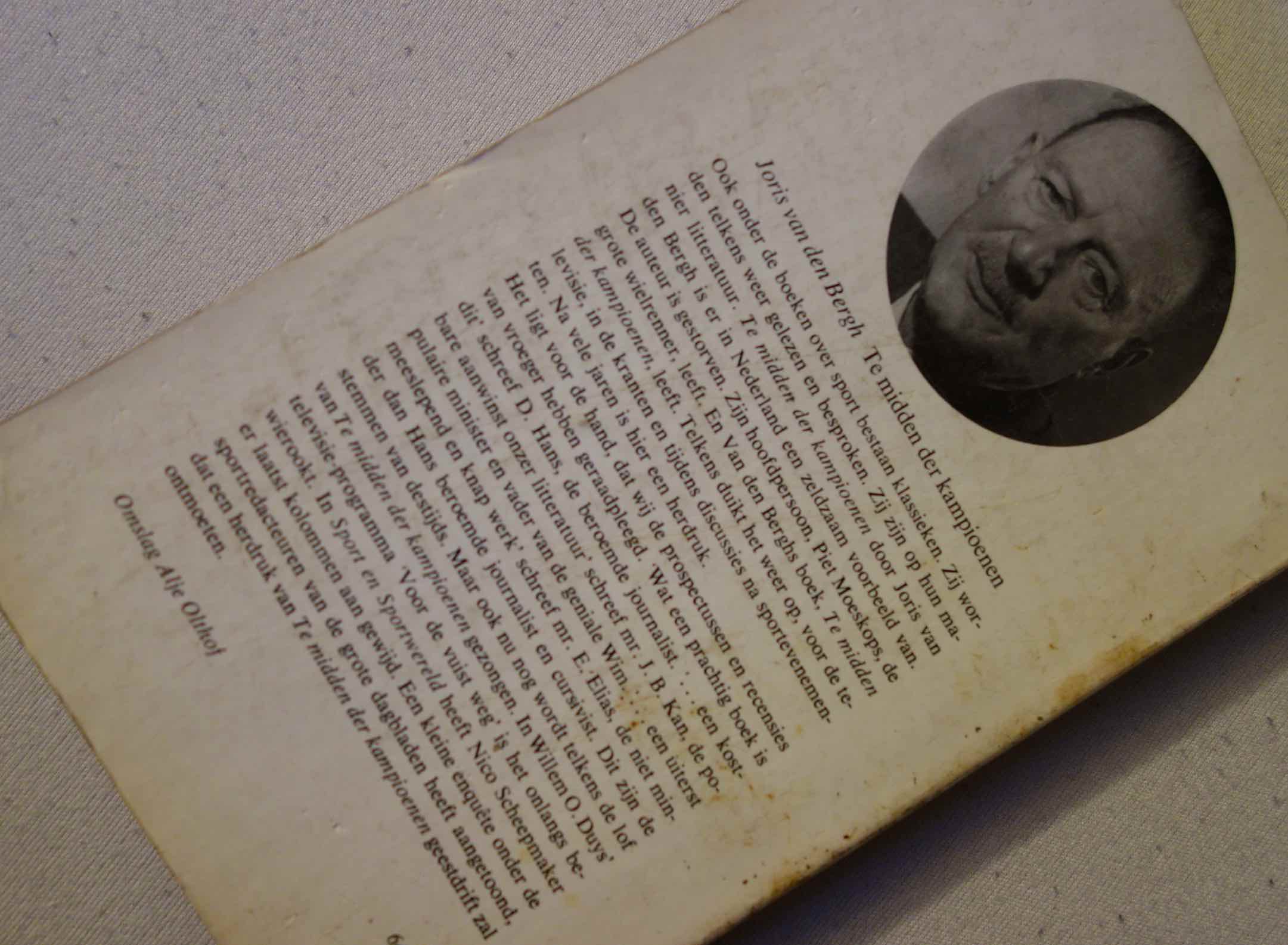
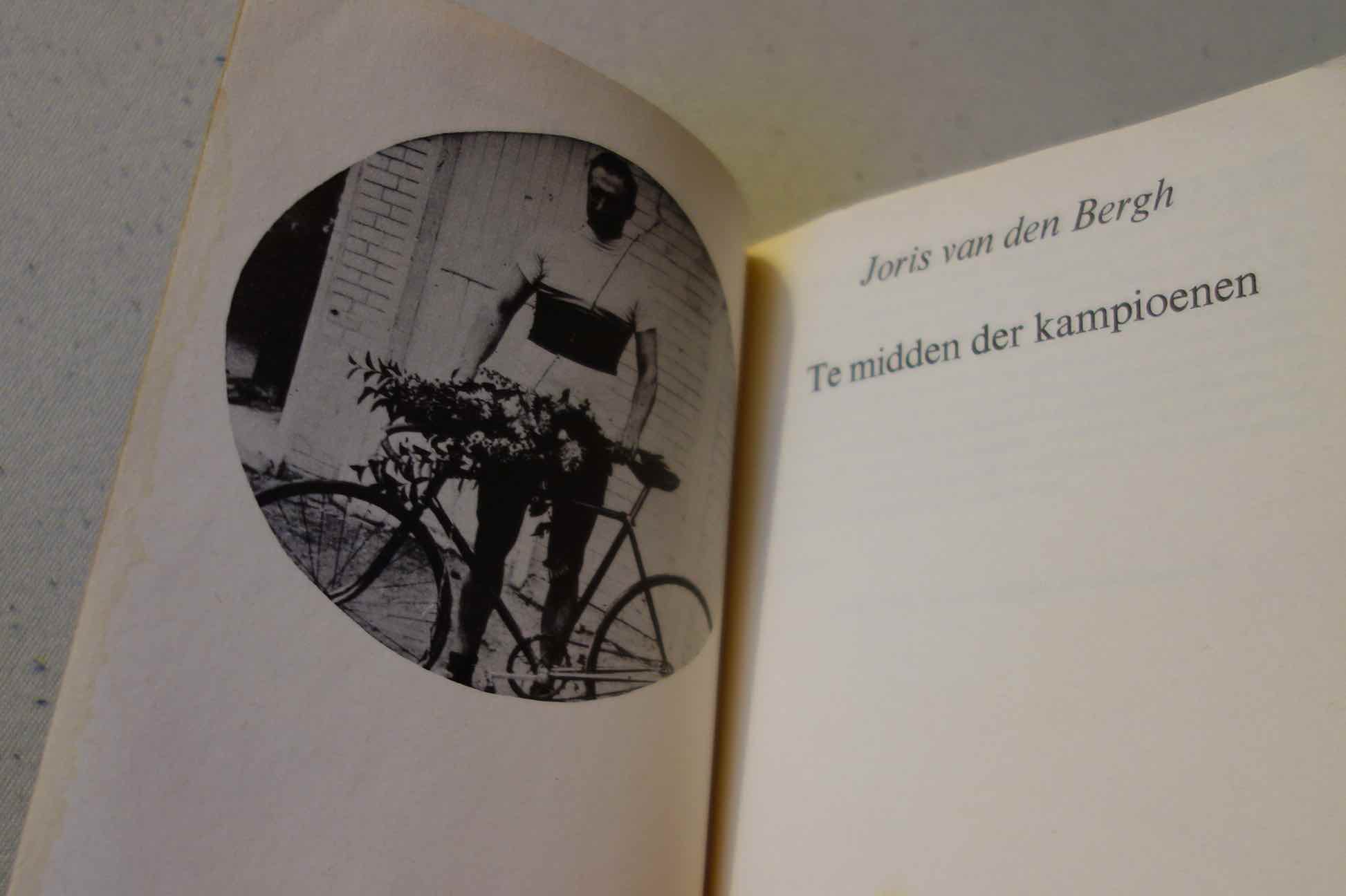
Last weekend in the Neerkant swap meet I bought an A4-size, 80 page brochure published by the Municipal Museum Service in Dendermonde, Belgium, run of 500 copies, to act as a supporting publication for their 2007 Frans Bonduel exposition. It is well-made, with a nice, roomy layout, has many photos and a well-written text, good paper too, so I just couldn´t give it a miss for 5 Euros. Besides, it afforded one more chance to polish up my Flemish, a language which I like a lot for its more powerful sounding accent, contrasted to the light-footedness and elegance of Dutch, to which it is closely related. Flemish somehow seems to be the perfect language for people like ijzeren Briek, “iron” Briek Schotte.

Title

It´s called In de ban van Frans Bonduel (“Spellbound by Frans Bonduel”) and was written by Jean-Pierre van Cleempoel, who outs himself as a lifelong fan of Bonduel´s, and he makes his enthusiasm felt from the start. Van Cleempoel is a member of the “Scheldetrappers Wielertouristenclub” cycling club and heavily involved in cycling, as it seems, so he knows what he´s writing about. Also he hails from the same area as Frans Bonduel himself, and met him many times.

In the book one is very quickly acquainted with Bonduel, with his background (his father was a factory worker), and with the fact that he had to fight for what he wanted. He was one of those Flemish riders who saw cycling as a way out of economical misery, lifelong toil in the factory or the fields. Frans´ parents agreed to his becoming a racer when Frans was 15, in spite of his brother having had to stop cycleracing after a bad crash, which is telltale.

Frans then went on to win a great many races, to become economically successful and to make a name for himself. One more thing I like about him is that he stayed very much down-to-earth, and, while soon being materially rewarded for his cycling prowess, he stayed a pro for nearly 20 years. His rather unglamorous wife (to whom Bonduel would eventually be married for two thirds of a century) was able to open several businesses with his prize money, securing the couple´s financial future for the time after Frans´ racing career. This is one of them, a clothes shop which was situated in their home.

Winkel

During his time as a pro Bonduel won the Ronde van Vlaanderen (1930), took part in the Tour de France four times, and excelled at Paris-Brussels, which earned him the nickname of “M Paris-Bruxelles” and “the toughest of the tough” in the French cycling press. The 1939 issue of the course des deux capitales saw Bonduel break the 40-kph-barrier when he finished the close to 400 km race at an average of 40.08 kph.

Bonduel himself said that when the storm was worst, he was at his best, and he felt at his strongest when the rain bucketed down. The question of course is if rain alone made Bonduel go fast. Cleempoel describes an episode in Benduel´s racing carreer, the 1933 season, which makes one wonder. Returning from a Berlin track meet in the late summer of 1932, Bonduel takes a break in Cologne and downs a glass of ice cold beer to quench his thirst in the summer heat. This is later said by his doctor to have caused a liver condition which hampered his racing for most of the 1933 season. If drinking cold liquid in the summer caused liver problems, I guess there would be a gaping hole where my liver should be. Maybe there were other substances involved than just a glass of beer?

During Bonduel´s close to 20 year racing career he experienced a vast development in the tools of his trade. Look at this 1928 bicycle, sadly out of focus even in the original photo:

1928

It´s a double sided hub – eqipped bike with a rather tall frame, handlebars the same height as the saddle, oiler in the seat tube to ruin the chain in a matter of hours. Compared to what was possible at the time, the contraption looks pretty archaic – a machine for machos, just what the racing bosses wanted them to be.

ParisBrussel1938Next, in 1938, there is an already much smaller frame size because the handlebars are much lower in relation to the saddle. Also there is an Osgear, the braze on fitted pro version. Wheels also are much lighter, it seems.

Parijs-Brussel1939

The 1939 record breaking Paris-Brussels bike is much the same.

1946

And, lastly, in 1946 there is something which looks like a Simplex to me, but the quality of the photo doesn´t allow more than a guess.

Have I explained sufficiently why I like racers like Frans Bonduel? The non-glitzy type, riding machines that enable them to achieve quite unbelievable feats, but which still are about as low-tech as bottle openers? And of course they speak the right language.

Happy Anniversary – Sort Of

Here are some snaps of a Masi seen at the Neerkant meet. Not much to write about – good, though uninspired frame, somewhat kitschy groupset, loads of time spent on polishing. According to the owner the bike has about 2,000 km on the clock since new. Although admittedly it´s special because of that, its not my sort of bike, but perhaps there are some readers who like it. Space was too cramped for a full shot.

ZNMasichainset

ZNMasiforkcr

This bike is perfectly clean down to the slightest detail.

ZNMasiftder


I love the chome highlights, I must say. Great deal of skill in the paintwork.

ZNMasiheadbadge

ZNMasirearbk
Yeah, well, eighties taste.


ZNMasirearder


The adjuster bolt has been cut and a slot has been filed into it so that you need a fine screwdriver to reach into the threaded hole in the dropout in order to adjust the wheel.

ZNMasiseatcl

Excepting the engraving on the seat stay tip, not much special attention here.

Neerkant, I Love It – Or Do I?

Visiting a meeting like the Stalen Ros (“Steel Horse”) at Neerkant gives the attentive blogger some rather deep insights.

You meet lots of people, and as the popularity of our very special pastime is growing, there are some new faces too, very nice. There are loads of new meets, mostly rides, great. I can vividly remember that when I myself tried to get a lightweight run going about 15 years ago interest was limited. But in 2013 here we are with a whole plethora of folders announcing lightweight rides and swap meets:

ZNFolders

Also it seems people get more and more knowledgeable and interested in detail, still better. Two more things I can remember vividly from 10 years ago: There was the weird occurence that I was ridiculed on a German old bike internet forum because I dared ask which lugs a bike had, and the other one was that there actually were people who collected bikes like stamps, by the colour. Collecting colour variants is of course OK if technical progress is not what you focus on as a historian/collector, which is a decision everybody is free to make, but still.

What I definitively don´t like is that parts and bike prices are skyrocketing while the market seems to be swept clean of special parts. E.g., you find loads of Shimano and Campag mid-range items, but good early derailleurs are few and far between. I think there were only one or two thirties bike in the show, and none offered for sale AFAIK. For the first time I didn´t buy anything, save a rather tired 10 Euro 1950s B17 to be soaked, straightened and used up on a hack bike and an admittedly nice book, which I´m going to post on, for a fiver.

Erik Boelen, the organizer, says that there were fewer than the 50 pre-registered bikes in the show, this may have been due to the fact that Western Belgium and large parts of France, the UK and the Netherlands were snowed under in the most wintery March we´ve had for decades. It says in the newspaper that in our part of Germany, nature is a month behind in her spring activities. So this was all there was in the show this year,

ZNshow

and this was a large part of the swap meet:

ZNhalle

Erik says that there were 54 stalls with 33 Dutch, 6 Belgian, 9 German, 3 French and 3 UK stallholders. Nearly 450 visitors came to Neerkant despite the wintery conditions many experienced on the way. Eric thinks that the weather had a negative influence on these figures, too.

Of course, some old stalwarts attended, like Heinz Fingerhut of Velo-classic.de:

ZNHeinz

I´m not saying whose greedy hand it was that snatched a feeder bottle out of the box while an unsuspecting Heinz was grinning into the camera.

ZNpforks

Most other stalls were well stocked if small. And here´s another greedy hand, but no smiling face.

ZNbooksUlrich

Here´s a grinning face that shouldn´t be, and deservedly no greedy hand, at least not for the Jan Ullrich book. Actually the Ullrich book is an autographed copy, until the meet unbeknowns to the vendor, and when a potential buyer found out and was fair enough to mention it, the book vanished in the vendor´s collection on the spot. This is a good example of the relaxed and friendly atmosphere I like about the Neerkant meet.

ZNpordered

Very nice and orderly, no face, no hand, just good stuff.

ZNpTisch

Not quite so orderly, but also typical in the way of the quality of goods offered.

ZNppedalhaken

Even less orderly, but even nicer stuff.

ZNpSaddles

Again very orderly, and the snatching hand and grinning face were both mine as the only affordable non-sprung Brooks in the meet was the one I got.

Now some impressions of the frames and bikes offered. There were three bikes in the meet that I either found interesting myself (original 1940s Hugonnier-Routens, 1950s Gold-Rad paced bike) or that have grail quality for many readers (unused 50th anniversary groupset equipped Masi). I will soon describe these in their own posts. Good opportunity to become a follower of this blog in order to be informed by email when those posts are up.

ZNCplBikes

ZNfcaballero

ZNfDosscheConc

ZNfFrames

ZNPeugeotporteur

ZNPeugeotPX

ZNphotoRaleighProf

The problem for me in taking photos at the event was that it was just too dark on the premises to switch the flash off and just too bright for the flash to work properly. Perhaps I better explain: The main feature of my camera is its being pink. It is a 90 Euro Samsung sold to me for 45 because it seems people don´t want pink cameras as much as they should. I find it´s a great conversation starter, though, especially at control posts of testosteron soaked cycling events. Actually the deal didn´t save me any money at all, because my wife wanted the camera as soon as she´d set her eyes on it, so I had to get her a pink camera, too. By that time the shop had run out of cheap Samsungs, and I had to purchase a full price Nikon. Pink stinks.

Anyway, at Neerkant this is what happened more often than not:

ZNphotojoco

No, I didn´t stay until midnight, in fact I left before mid day, it´s the effect of the flash. You´ll have to excuse the fact that the snaps I took at Neerkant either seem to be 12 hours out of date or are shaky. As soon as this blog has a million followers and multinationals line up to pay me for advertising space I´ll get a better camera, promised.

ZNunbek

There was a nice, but indifferent track bike in the show which had lost all its identity. Its owner is looking for info, but I wonder what the Dollar signs are for. I wasn´t under the impression that the bike was for sale. Here´s a pic of the early style Nervex Pro lower headlug and the wonderful twin plate fork crown:

ZNunbekbalhoofd

Also there were some interesting cars visitors came in. The white snow caked ex-ambulance is Hilary Stone´s conveyance. I had a similar car, a Citroen CX Ambulance Normalisée, years and years ago, and can only say it was the nicest car I´ve ever had; fast, roomy, powerful, combined super comfy suspension with perfect roadholding. Even better, mine was a first series specimen with stainless bumpers and seventies spaceship style controls. The Rover is a 3.5 litre V8, and the Volvo sounds rather gnarly, too.

ZNAutos

Tot volgend jaar!

Something to look out for

While carrying out routine maintenance this afternoon I discovered that the saddle I used for more than 10.000km on my Ellis-Briggs randonneur has broken a side rod. It broke just aft the Campag two bolt seatpin cradle, similar to the one I put next to the saddle for illustration purposes.

Saddlebroken

I wonder if this is something that happens to Campag two bolt seatpins, or if it is due to chrome brittleness, or if there is some other reason? The frame assembly was very old; I bought it as part of a completely worn saddle. It is not date stamped.

Some of you will recognize that the saddle is a Colegrave, so let me add that Tony isn´t to blame at all for the problem. Firstly he did the upper, not the frame, and secondly I supplied the frame assembly myself. On the contrary I find that Tony did a great job, I just loved the saddle, the mileage shows this. The breakage is completely unconnected with his work.

So there´s one more thing to add to the list of things to check when doing maintenance on your bikes.

Follow

Get every new post delivered to your Inbox.